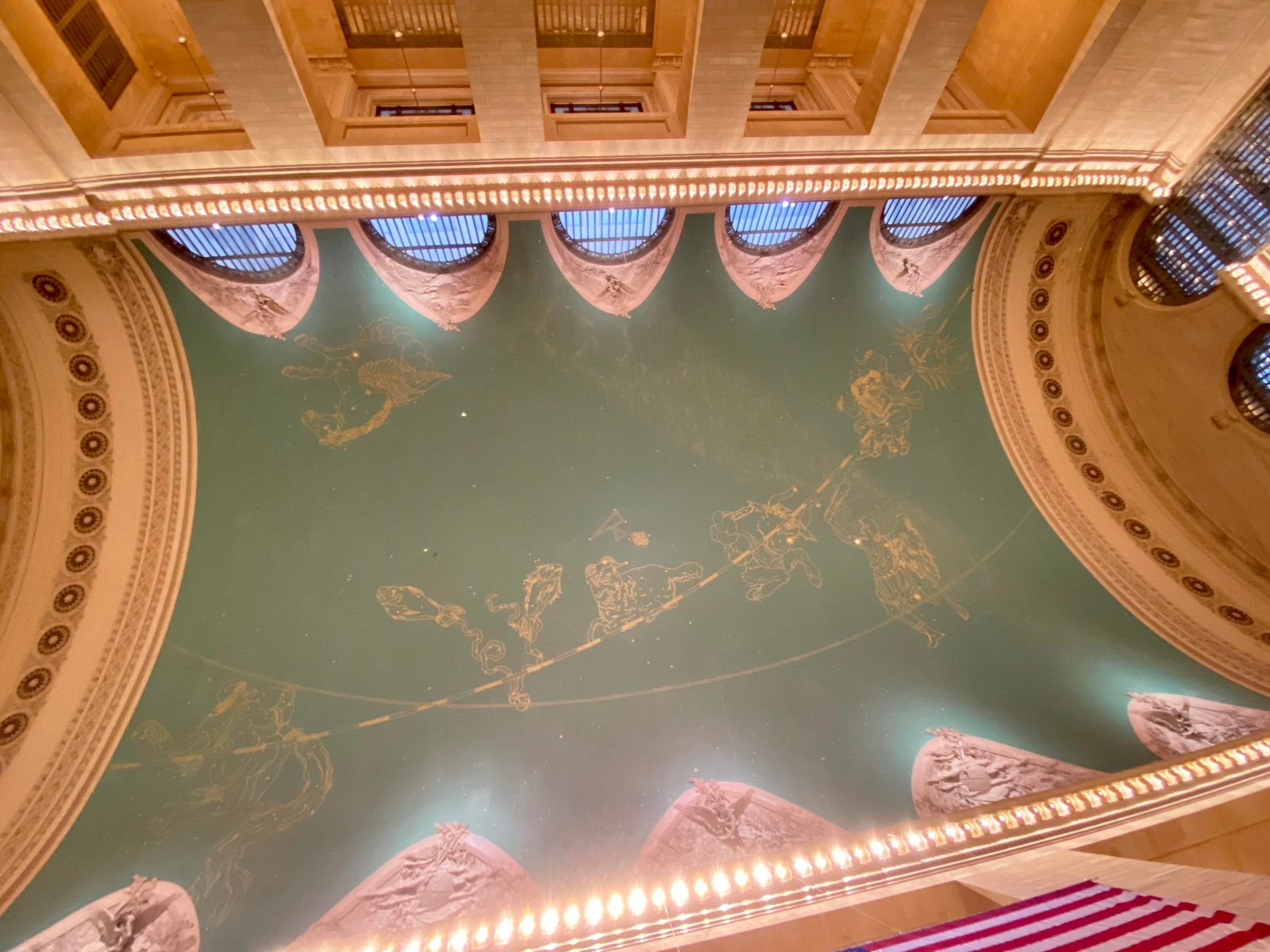
Main Concourse Celestial Ceiling
The vast vaulted ceiling displays a celestial map with over 2,500 stars, oriented backwards as if viewed from a divine perspective.
Look up from the center to spot the glowing zodiac constellations.

Manhattan's skyline is a vertical timeline of American ambition, where limestone spires share the grid with glass curtain walls and century-old terminals anchor neighborhoods shaped by millions of commuters. This guide identifies the structures that define the island's profile and explains how to visit them on foot or by water.
Quick answer
The coolest architecture NYC offers spans Grand Central Terminal's celestial ceiling and brass details, the Chrysler Building's stainless steel crown, One World Trade Center's faceted glass volume, and the Guggenheim Museum's spiral ramp. Most are accessible daily with free entry to public spaces, though observation decks and interiors require separate tickets or reservations during peak seasons.
Grand Central Terminal opens its Main Concourse at 5:15 a.m. every day, and the early light through those three arched windows reveals why Beaux-Arts design commanded civic spaces a century ago. The vaulted ceiling—125 feet overhead—maps 2,500 stars in reverse, a mistake that became permanent when the paint dried. Brass chandeliers and Tennessee marble anchor a room that processes 750,000 people daily, yet the acoustics in the Whispering Gallery outside the Oyster Bar remain so precise that a whisper aimed at one corner reaches the opposite arch clearly. The coolest architecture nyc claims as signature divides into three eras. The early 20th century left the Woolworth Building's Gothic terracotta and the Chrysler Building's radiating arches—stainless steel cladding that catches afternoon sun in a way no glass tower replicates. Post-war International Style brought the Seagram Building's bronze I-beams and setback plaza, a formula copied across Midtown but never improved. The 21st century answered with supertalls: One Vanderbilt's angled observation floors, the Vessel's climbable honeycomb structure, and One World Trade Center's chamfered edges that align with the Statue of Liberty from certain sightlines. Manhattan's architectural landmarks concentrate below 60th Street, where zoning allowed density and bedrock sits close to grade. The Flatiron Building anchors Madison Square, its 22-foot width at the prow unchanged since 1902. The New York Public Library's marble lions guard a reading room longer than a city block, open to anyone without fee. The Guggenheim spirals upward in poured concrete, Frank Lloyd Wright's only New York commission, where the gallery ramp dictates how visitors encounter art. Water-based perspectives—especially southbound routes past Lower Manhattan—compress the skyline into a single frame, where the World Trade Center's faceted glass, the Municipal Building's gilded crown, and Brooklyn Bridge's Gothic arches share the sightline that defined the city for incoming ships. Early morning and late afternoon light render limestone warm and glass reflective, conditions that flatten by midday into uniform brightness.
“The vaulted ceiling maps 2,500 stars in reverse, a mistake that became permanent when the paint dried.”
The best arrival window is 05:15–10:00 to observe the Main Concourse architecture with minimal foot traffic and optimal natural light. Visiting during these early morning hours ensures a clear view of the celestial ceiling and architectural details.
—
Quiet conditions allow for detailed observation of the Main Concourse structure. Early light enhances the interior aesthetic before peak commute times.
Mild 55°F to 70°F
Pleasant temperatures make walking between architectural sites in Manhattan comfortable. Mid-week days avoid the surge of weekend tourists.
Cool 50°F to 65°F
Clear skies often provide high-quality natural light through the terminal windows. Humidity levels remain low, favoring external architectural walking tours.
Verdict: Tuesday to Thursday, 05:15–10:00, during April or October offers the most favorable balance of light, crowd volume, and climate.
Grand Central Terminal maintains a consistent daily schedule for visitors exploring its architectural design throughout the week.
Admission costs for visiting Grand Central Terminal depend entirely on the specific areas or tours requested by the visitor. Entry to the historic Main Concourse remains accessible to the public without charge.
Verdict: A typical visitor pays 0 USD to access the Main Concourse, though costs vary if choosing to participate in private or third-party architecture tours.
Grand Central Terminal is located at 89 E 42nd St, New York, NY 10017. The most efficient way to reach this hub is via the extensive New York City subway network which connects directly to the terminal.
4, 5, 6, 7, or S train to Grand Central-42 St
M42, M101, M102, or M103 to 42nd St
Drop-off at 89 E 42nd St
To experience the architecture without crowds, plan your arrival between 05:15–10:00. Entering through the Main Concourse allows immediate access to the primary structural details.
Grand Central Terminal serves as a prime example of Beaux-Arts architecture in Manhattan. These structural features highlight the technical and aesthetic precision of the early 20th-century design.
The vast vaulted ceiling displays a celestial map with over 2,500 stars, oriented backwards as if viewed from a divine perspective.
Look up from the center to spot the glowing zodiac constellations.
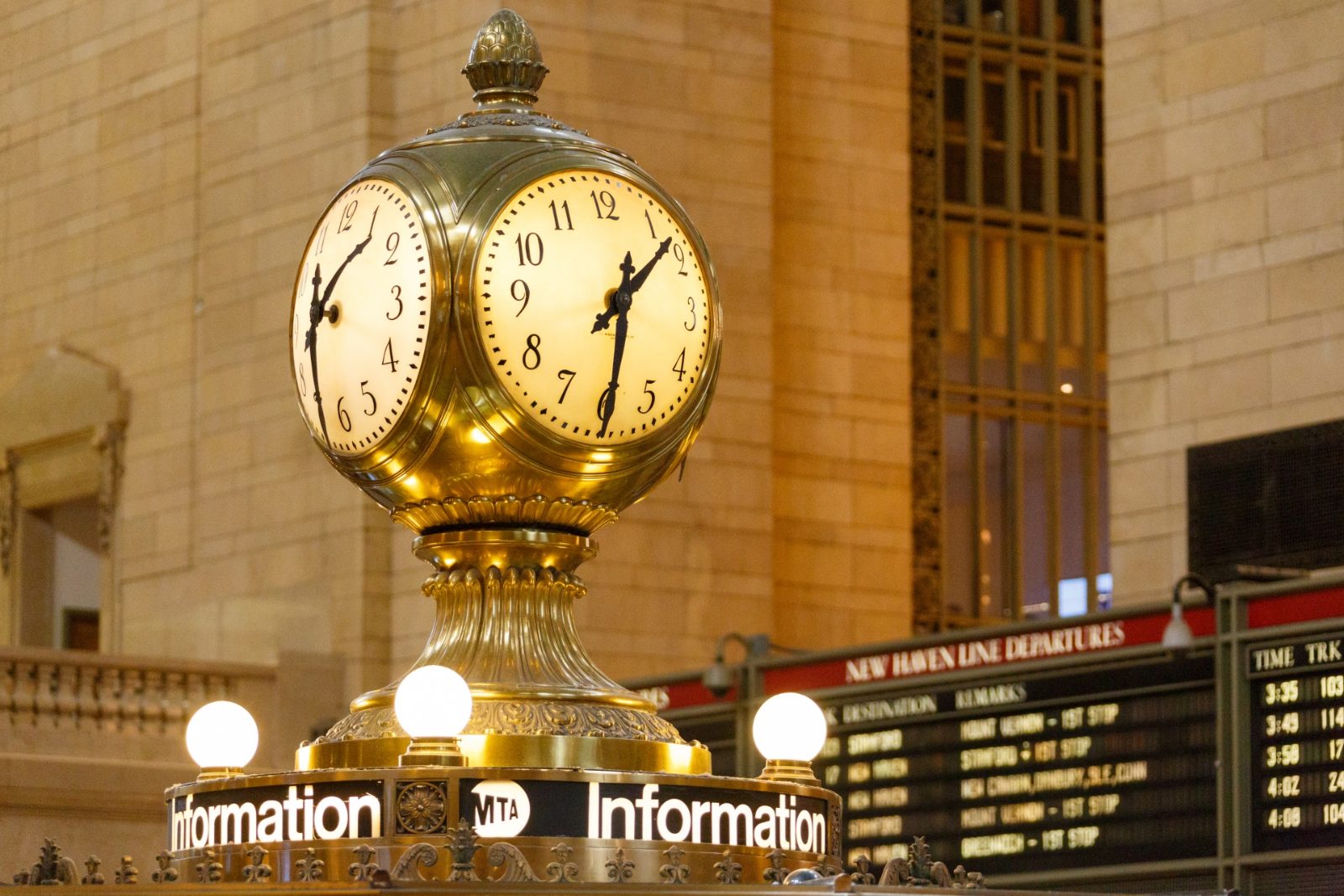
This brass clock sits atop the central information booth and features four faces made of opalescent glass.
Check the time from any angle while standing in the hall.
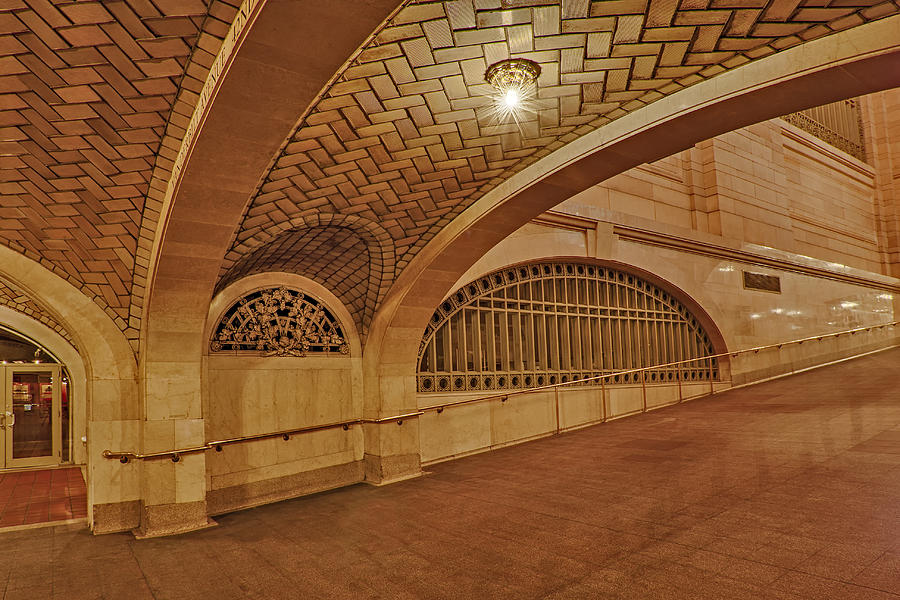
Located outside the Oyster Bar, this space features low-slung Guastavino tile arches that carry sound across the vaulted ceiling.
Stand in opposite corners to hear a whisper from across the room.
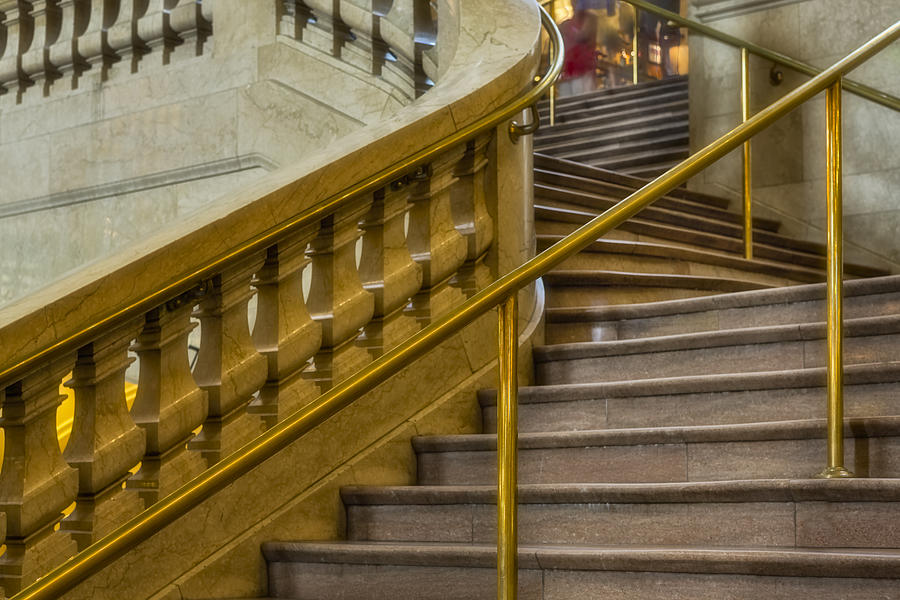
Modeled after the staircase in the Paris Opéra, this double-flight marble structure connects the Main Concourse to the balcony level.
View the entire concourse from the top landing for perspective.
Extend your architectural exploration by visiting these notable structures located within a short walk of Grand Central Terminal. These sites allow for a cohesive itinerary that highlights different periods of Manhattan's urban development.
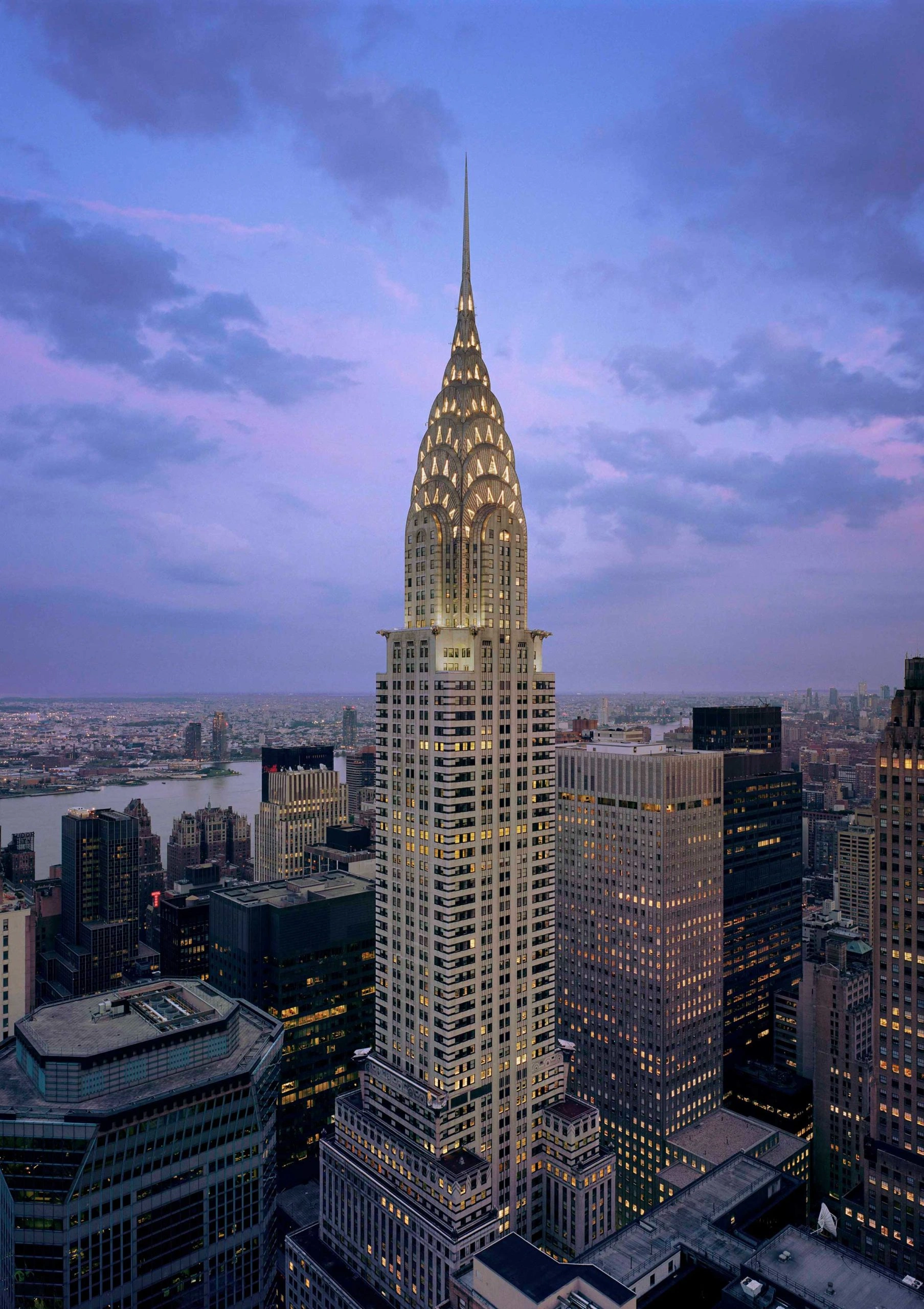
5 min walk
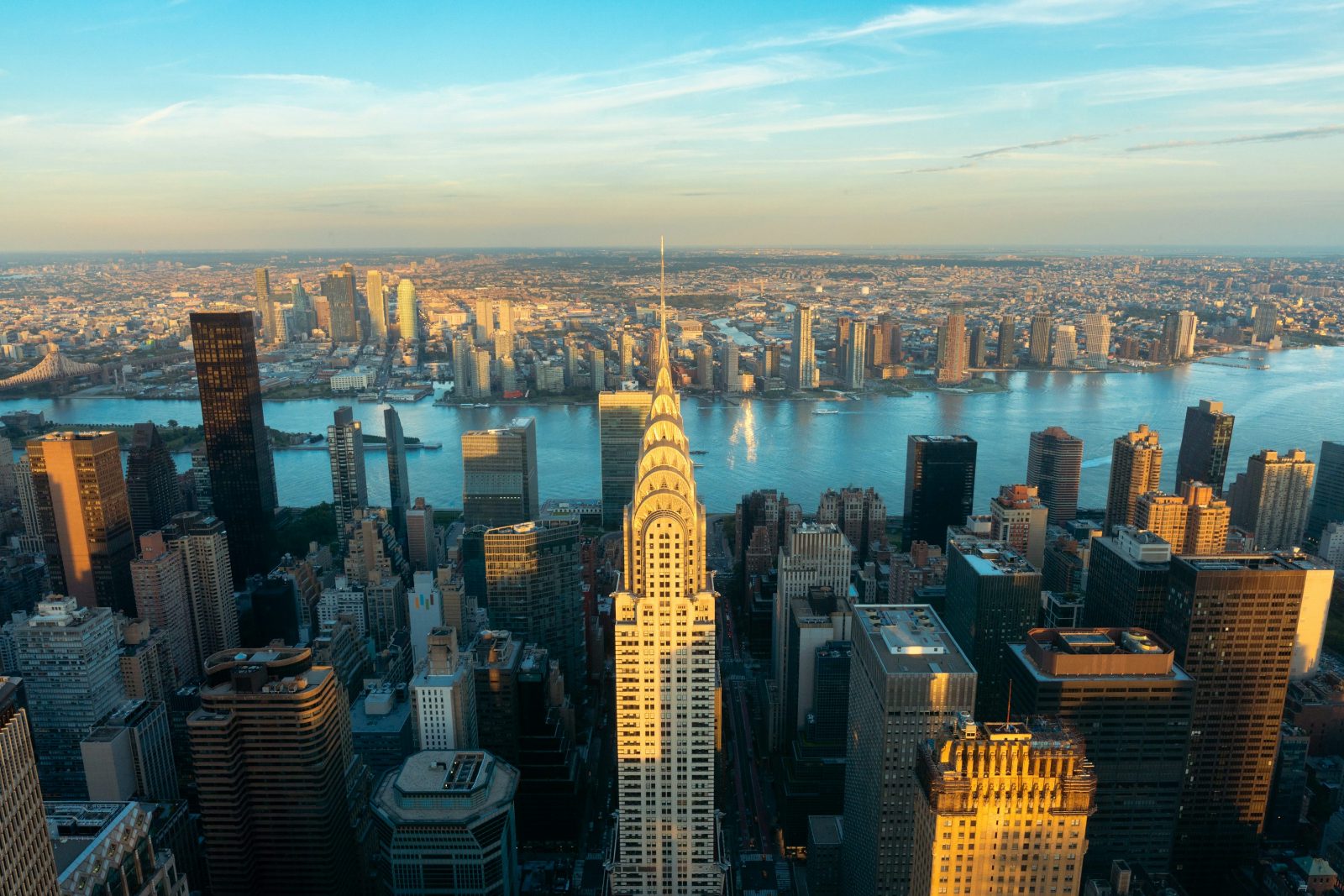
This Art Deco skyscraper remains one of the most recognizable silhouettes in the city and is located just blocks from the terminal.
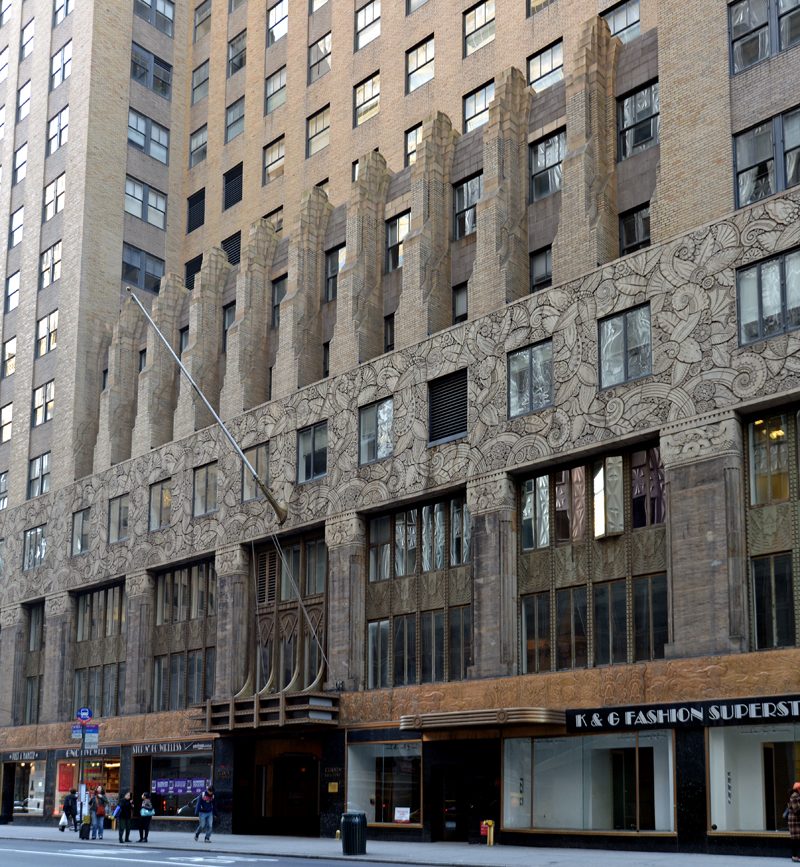
2 min walk
Located directly across from the terminal, this structure features intricate terra-cotta ornamentation and serves as a prime example of Art Deco office design.
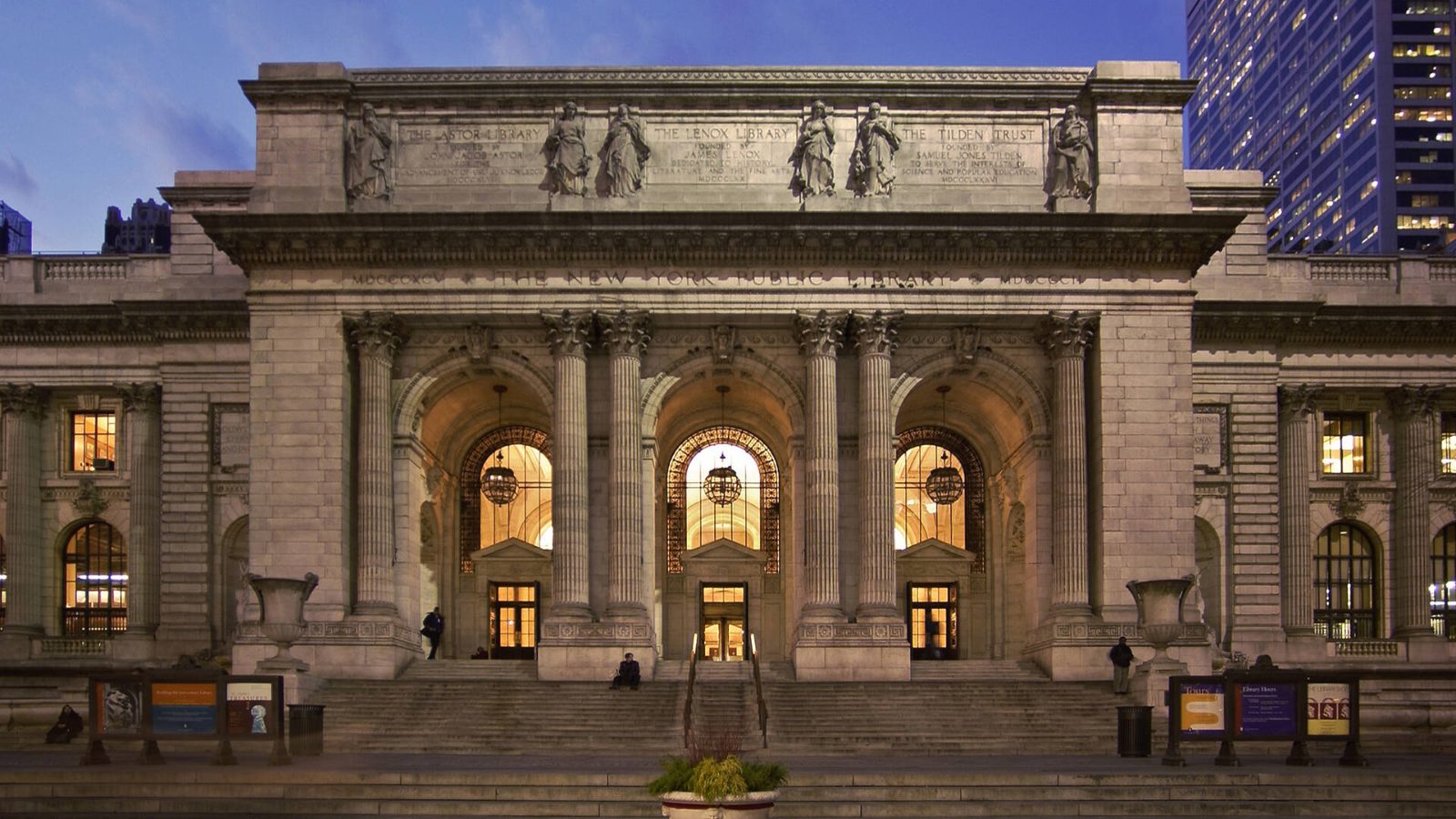
12 min walk
This Beaux-Arts masterpiece provides a distinct contrast in style and scale, offering a quiet architectural counterpoint to the transit hub.
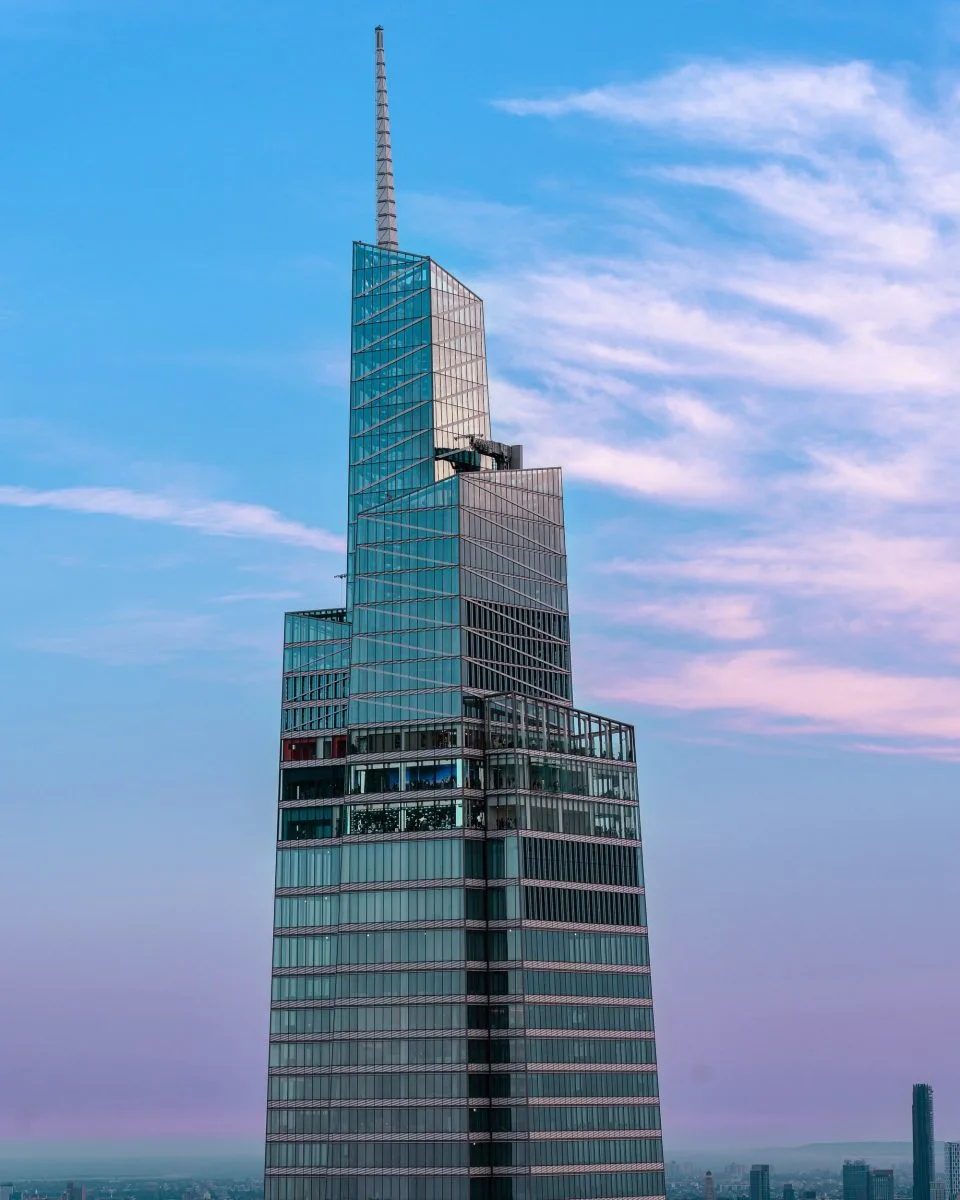
1 min walk
Rising directly adjacent to Grand Central, this modern supertall skyscraper represents the newest evolution of the district's architectural skyline.
Everything you need to know about coolest architecture nyc
Grand Central Terminal is widely recognized for its Beaux-Arts design, celestial ceiling, and iconic clock, which stand out as a premier example of historical engineering. Many visitors consider it a essential stop when seeking the coolest architecture nyc due to its massive Main Concourse and intricate stone detailing.
There is 0 USD entrance fee to enter the Main Concourse and enjoy the space. You can experience this segment of the coolest architecture nyc for free during regular operating hours.
The best arrival window is 05:15–10:00 to avoid heavy pedestrian traffic and enjoy natural light streaming into the hall. Visiting during these early hours provides a calm atmosphere to appreciate the details of this notable nyc landmark tour.
The terminal is located at 89 E 42nd St, New York, NY 10017, placing it in the heart of Midtown Manhattan. It serves as a major transportation hub, making it a convenient stop on any itinerary focused on the coolest architecture nyc.
The site is open daily from 05:15–02:00, allowing for flexibility in your planning. Please note that while the Main Concourse is accessible, individual shops or specialized areas may have different operating schedules.
Yes, this public space is welcoming to visitors of all ages. It is a suitable destination for families who want to admire classic design and observe the busy energy of a functional transit terminal.