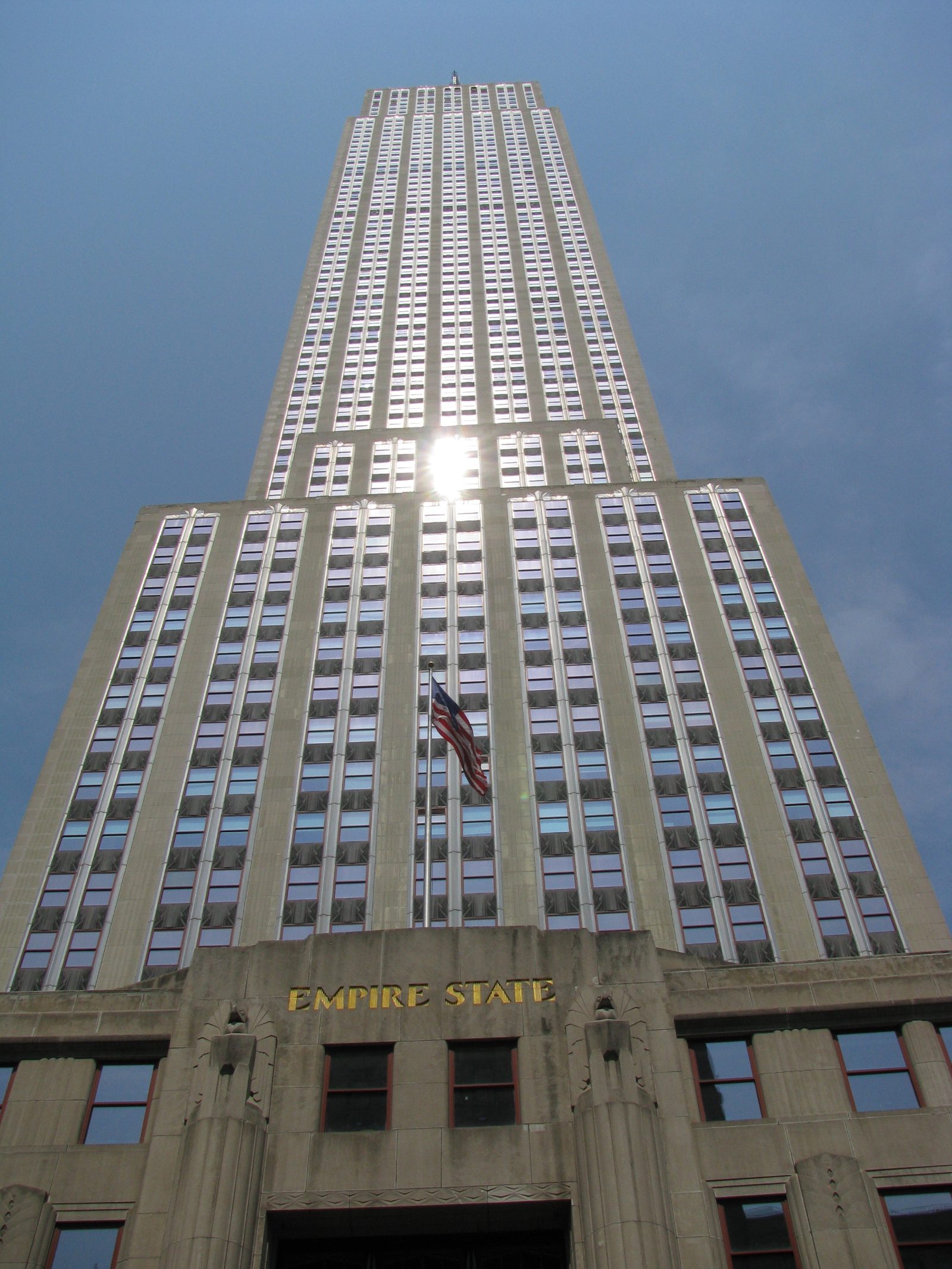
Empire State Building
A 102-story Art Deco skyscraper designed by Shreve, Lamb & Harmon, known for its tapered form and limestone facade.
Look toward the southern horizon for views of Lower Manhattan.

Manhattan's skyline tells a century of architectural ambition in steel, limestone, and glass. From Art Deco spires to modernist towers, the island's most recognized structures draw millions of visitors each year who seek both observation deck views and street-level encounters with design history.
Quick answer
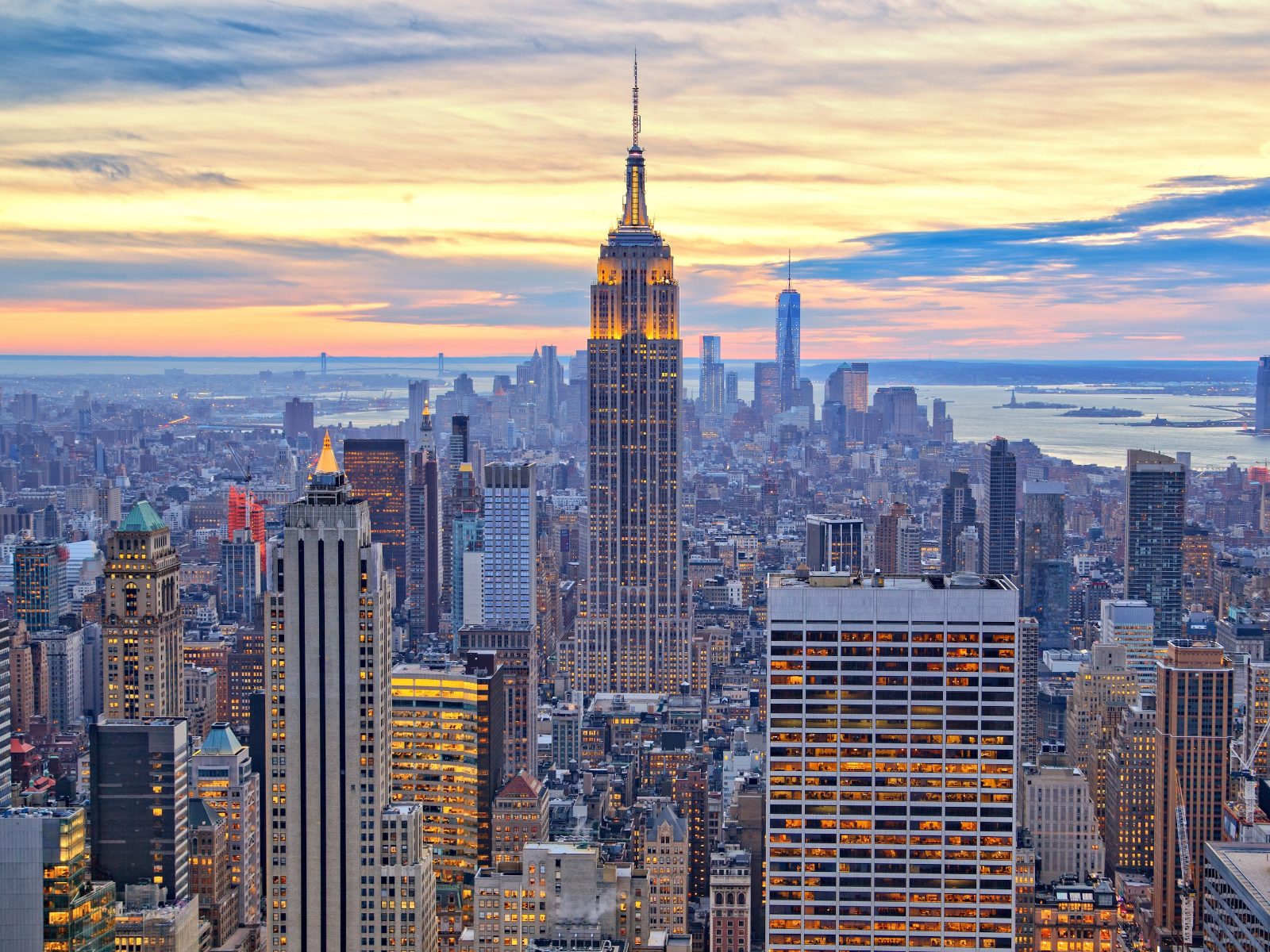
Famous architecture in NYC includes the Empire State Building at 350 Fifth Avenue, open daily from 09:00 to midnight with standard admission at 44 USD for the 86th floor observatory. The Chrysler Building, Flatiron Building, One World Trade Center, and the Guggenheim Museum represent distinct eras—Art Deco, Beaux-Arts, contemporary glass, and modernist spiral—that together form Manhattan's architectural identity.
The Empire State Building held the title of world's tallest structure for four decades after its 1931 completion, and its limestone facade and setback silhouette remain the most photographed example of Art Deco verticality. Visitors entering at 350 Fifth Avenue ascend 1,050 feet to the 86th floor, where open-air terraces offer unobstructed sightlines across all five boroughs. The building's designers, Shreve, Lamb & Harmon, engineered the tower to rise in five deliberate tiers, each setback responding to the 1916 zoning law that required skyscrapers to taper as they climbed. That regulatory constraint became an aesthetic signature, repeated across dozens of Manhattan towers built in the same decade. Famous architecture in nyc extends beyond observation decks to street-level landmarks that anchor entire neighborhoods. The Flatiron Building, erected in 1902 at the intersection of Fifth Avenue and Broadway, introduced the steel-frame curtain wall to New York and demonstrated that a triangular footprint could support 22 stories without sacrificing interior light or structural stability. Its Beaux-Arts terracotta cladding and pronounced cornice line influenced commercial design for the next two decades. Twelve blocks north, the Chrysler Building's 1930 completion brought automotive motifs—hubcaps, radiator grilles, and stainless steel gargoyles—into high-rise ornamentation, though its crown, clad in Nirosta steel, was assembled in secrecy and hoisted into place in a single afternoon to claim the height record before the Empire State surpassed it. Contemporary additions to Manhattan's architectural roster include One World Trade Center, which reached 1,776 feet in 2013 and restored a supertall presence to Lower Manhattan's skyline. Its chamfered edges and glass curtain wall reflect sky and adjacent structures in equal measure, a design departure from the monolithic towers of the 20th century. Frank Lloyd Wright's Guggenheim Museum, completed in 1959 on Fifth Avenue's Museum Mile, inverted the traditional gallery sequence by placing visitors at the top of a continuous spiral ramp that descends six stories. Wright's cantilevered rotunda remains the most debated work of modernist architecture in the city, celebrated for its sculptural form and critiqued for the slope that complicates the display of flat artworks. New York City's architectural landmarks span styles because the city rebuilt itself in rapid succession—each economic boom left a new height record, each zoning amendment reshaped the permissible envelope. The result is a skyline where Gothic Revival, Art Deco, International Style, and parametric glass coexist within a two-mile stretch of Midtown, visible in a single panorama from the observation decks that remain the most reliable vantage for understanding the city's built density.
“The Empire State Building's setback silhouette became an aesthetic signature, repeated across dozens of Manhattan towers built in the same decade.”
Manhattan serves as a global center for architectural innovation, featuring styles ranging from Art Deco to Beaux-Arts. These structures define the city skyline and represent significant milestones in structural engineering.
A 102-story Art Deco skyscraper designed by Shreve, Lamb & Harmon, known for its tapered form and limestone facade.
Look toward the southern horizon for views of Lower Manhattan.
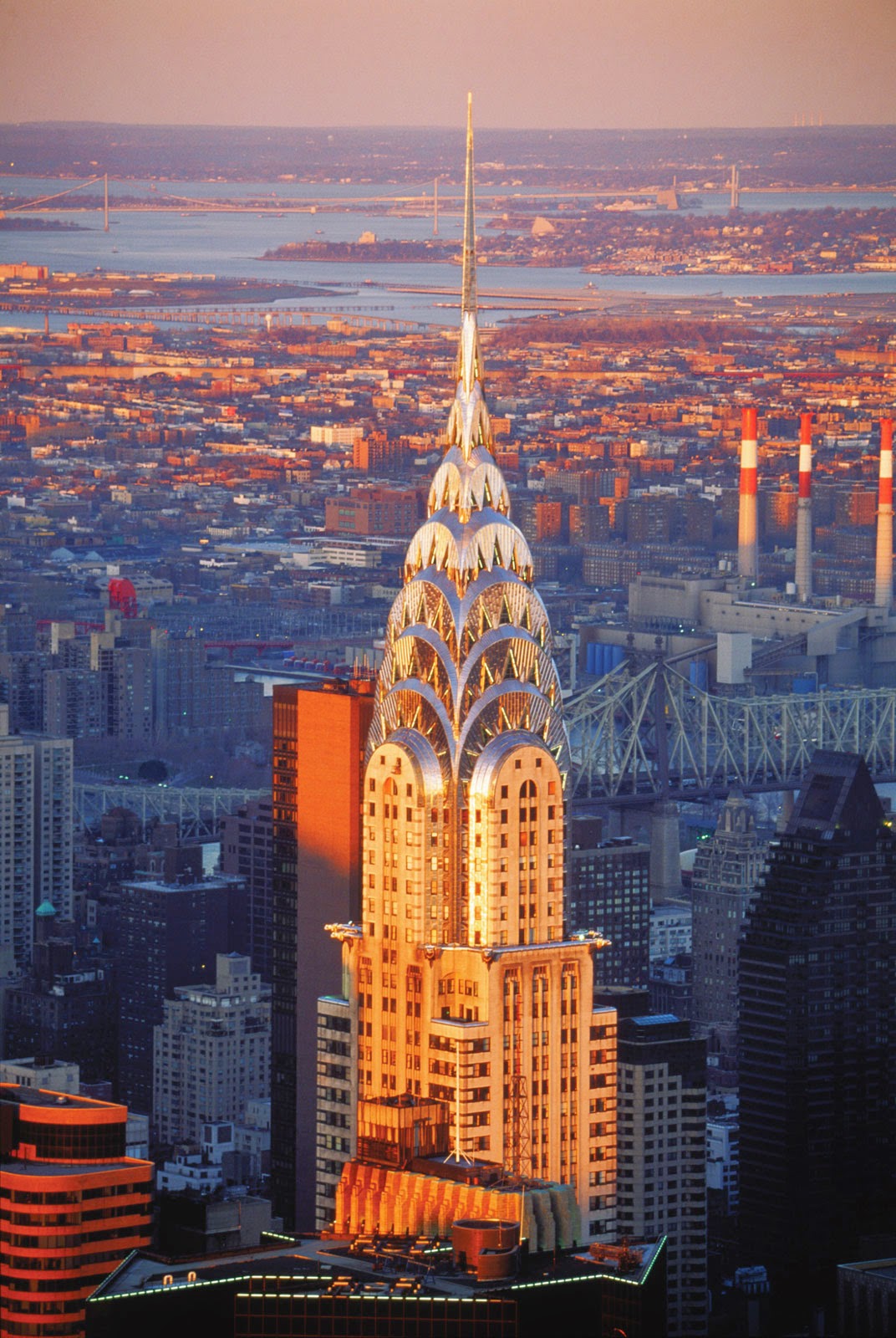
This Art Deco masterpiece features a distinctive terraced crown clad in stainless steel and sunburst motifs.
View the gargoyles from a distance to appreciate their scale.
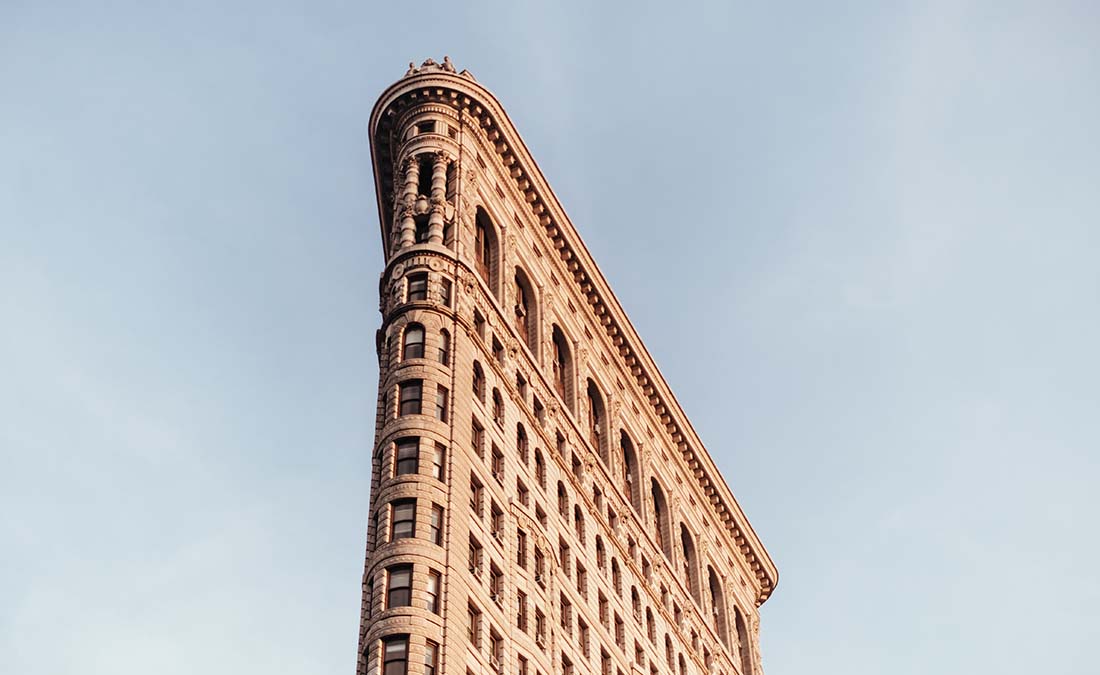
Completed in 1902, this triangular steel-framed building is noted for its unique wedge shape and Renaissance Revival details.
Stand at the intersection of Fifth and Broadway for perspective.
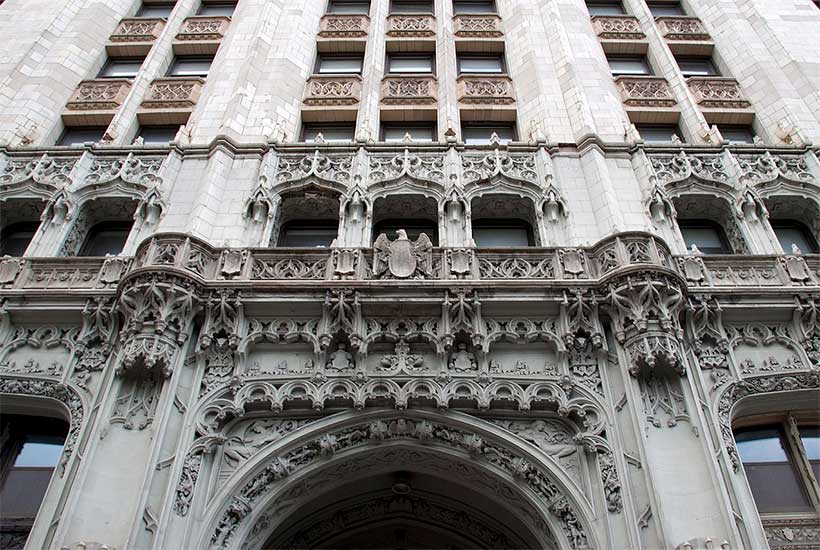
Often called the Cathedral of Commerce, this building displays intricate neo-Gothic terra cotta ornamentation.
Observe the lobby ceiling for complex vaulted mosaic work.
Manhattan's architectural identity emerged from layered waves of ambition and invention. The earliest masonry structures rose in the colonial era, when Dutch merchants built brick warehouses along the southern tip of the island. By the 1840s, cast-iron facades began to line Broadway and Soho, allowing taller buildings with expansive glass fronts—structures like the E.V. Haughwout Building, completed in 1857, demonstrated how iron framing could support five stories while flooding interiors with daylight. The late nineteenth century brought steel-frame construction, and with it the race upward. The Flatiron Building, finished in 1902 at Broadway and Fifth Avenue, used a triangular steel skeleton to reach twenty-two stories on a wedge-shaped lot, proving that engineering could adapt to Manhattan's irregular grid. The 1920s and 1930s marked the apex of Art Deco expression in famous architecture in nyc. The Chrysler Building, completed in 1930, crowned itself with a stainless-steel spire and terraced arches inspired by automobile hubcaps. One year later, the Empire State Building opened at 350 Fifth Avenue, rising 102 stories in just thirteen months—a limestone-clad tower that held the title of world's tallest building for four decades. These towers employed setback massing required by the 1916 Zoning Resolution, creating the ziggurat silhouettes that define Manhattan's skyline. Post-war modernism introduced steel-and-glass curtain walls: the Seagram Building, designed by Mies van der Rohe and completed in 1958, set a bronze-toned I-beam facade back from Park Avenue, establishing a plaza typology repeated across Midtown. Today, visitors encounter this architectural progression on foot. The Art Deco lobbies of the Chrysler and Empire State buildings remain open to the public, their polished marble and geometric reliefs preserved as they were in the 1930s. The cast-iron districts of Soho operate as galleries and shops within their original frames. The Seagram Building still anchors Park Avenue, its plaza a study in restrained modernism. Each layer—masonry, iron, steel, glass—stands legible on the streetscape, a continuous record of how New York landmarks adapted height, structure, and ornament to the constraints and aspirations of their eras.
The E.V. Haughwout Building completed in Soho, introducing cast-iron facade construction that allowed taller structures with large windows.
The Flatiron Building finished at Broadway and Fifth Avenue, employing a steel skeleton to reach twenty-two stories on a triangular lot.
New York adopts its first Zoning Resolution, mandating setback massing that shaped the stepped silhouettes of future skyscrapers.
The Chrysler Building completed with its iconic stainless-steel Art Deco spire, briefly holding the title of world's tallest structure.
The Empire State Building opens at 350 Fifth Avenue, rising 102 stories in thirteen months and reigning as the tallest building for forty years.
The Seagram Building designed by Mies van der Rohe completed on Park Avenue, pioneering the bronze curtain-wall and plaza modernist typology.
The Empire State Building operates on a consistent daily schedule, remaining open seven days a week to accommodate visitors. This schedule provides flexibility for those planning their architectural tour of Manhattan.
For those exploring Manhattan's architecture, the best arrival window is 09:00–11:00. Early morning visits avoid the largest midday crowds for a smoother observation deck experience.
—
Visiting on weekdays before noon reduces wait times significantly at major architectural landmarks.
Pleasant, 65°F–75°F
This window offers clear visibility and comfortable walking temperatures for exploring skyscraper districts.
Cooler, 55°F–70°F
Crisp air and lower humidity provide optimal conditions for outdoor architectural photography and city views.
Cold, 30°F–40°F
While temperatures are low, visitor numbers are at their lowest point of the year.
Verdict: The optimal period is Tuesday to Thursday, arriving between 09:00 and 11:00 during the months of April or October.
The Empire State Building is located at 350 Fifth Avenue, New York, NY 10118. Public transit via the New York City Subway provides the most direct access to this landmark.
1, 2, or 3 train to 34 Street-Penn Station
B, D, F, M, N, Q, or R train to 34 Street-Herald Square
M34 or M34A Select Bus Service to 34th Street
Drop-off at 350 Fifth Avenue
For the smoothest observation deck experience, plan your visit during the 09:00–11:00 arrival window to avoid the largest midday crowds.
Everything you need to know about famous architecture in nyc
The Empire State Building represents a classic example of Art Deco design, defined by its setbacks and tiered silhouette. It remains a central pillar when studying famous architecture in nyc due to its historical impact on the Manhattan skyline.
Many visitors choose to view this structure alongside other historic towers like the Chrysler Building or the Flatiron Building. Comparing these designs offers a deeper appreciation for the diverse styles found across Manhattan landmarks.
An architecture-focused cruise provides a unique perspective of the city's structural evolution from the surrounding waterways. This approach complements land-based exploration of famous architecture in nyc by offering unobstructed views of the exterior design.
Visiting the observation deck is a common inclusion in an organized Manhattan skyscraper tour, allowing for elevated city vistas. While many tours focus on ground-level details, ascending the building offers a distinct appreciation of its scale and height.
Visitors should note that the building has specific daily operating hours and standard admission policies. Planning ahead ensures you can enjoy the observation deck while adhering to site guidelines.
To maximize your visit to this piece of famous architecture in nyc, it is recommended to arrive during the early morning window. This helps you avoid larger midday crowds and enjoy a more relaxed observation deck experience.